
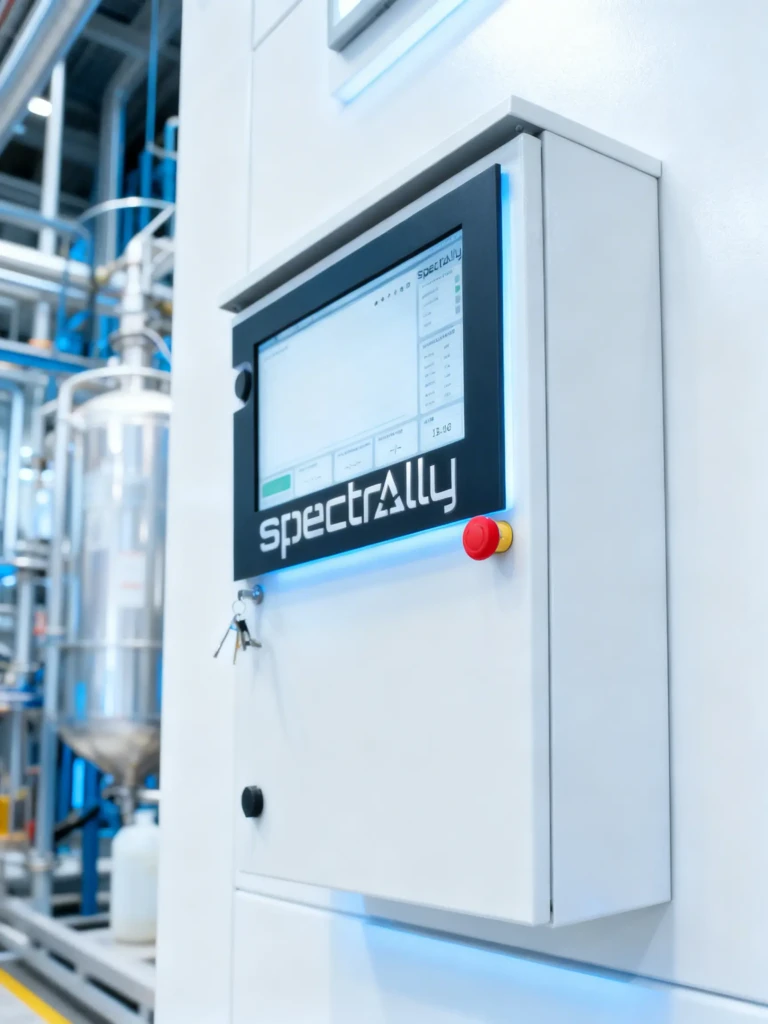
Spectrally™ X1 INLINE
Real-time quality control, directly in the process

Measurement without sampling and without downtime
Designed for 24/7 operation, even in demanding conditions
Integration of results with control systems / QA reports
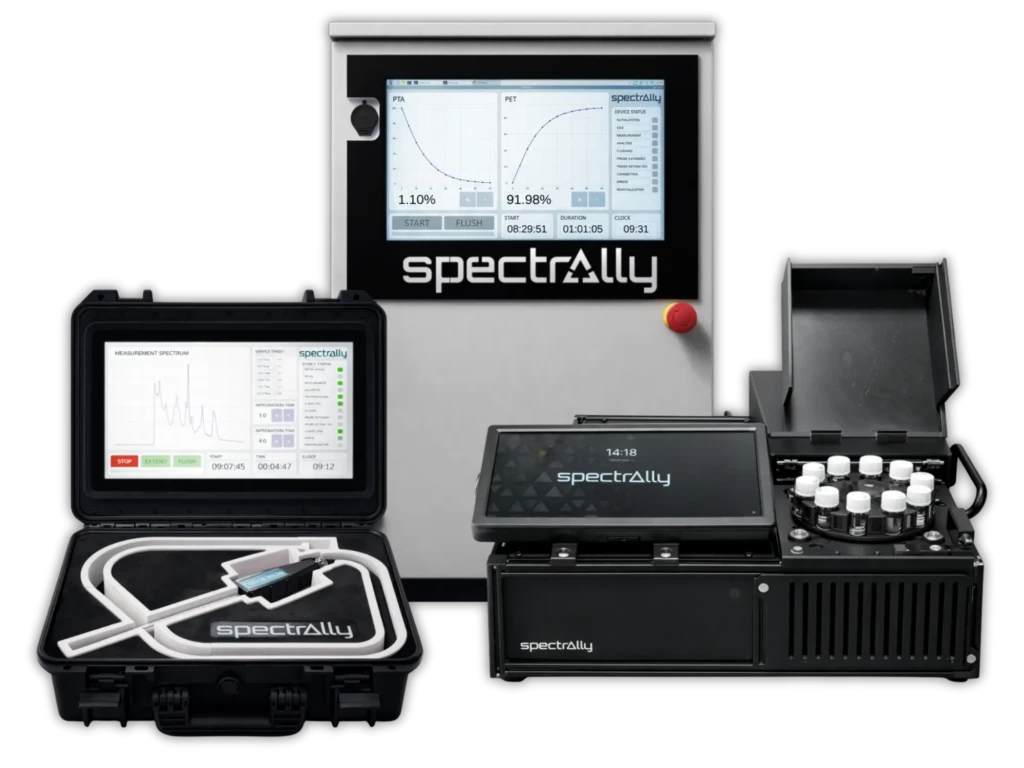
Analysis of a wide range of parameters, not only component concentrations
And multicomponent mixtures, where the capabilities of PLS/PCA end.
Accuracy achieved through AI algorithms tailored to the analyte and medium
Individually tailored
Real-time quality control, directly in the process
Measurement without sampling and without downtime
Designed for 24/7 operation, even in demanding conditions
Integration of results with control systems / QA reports
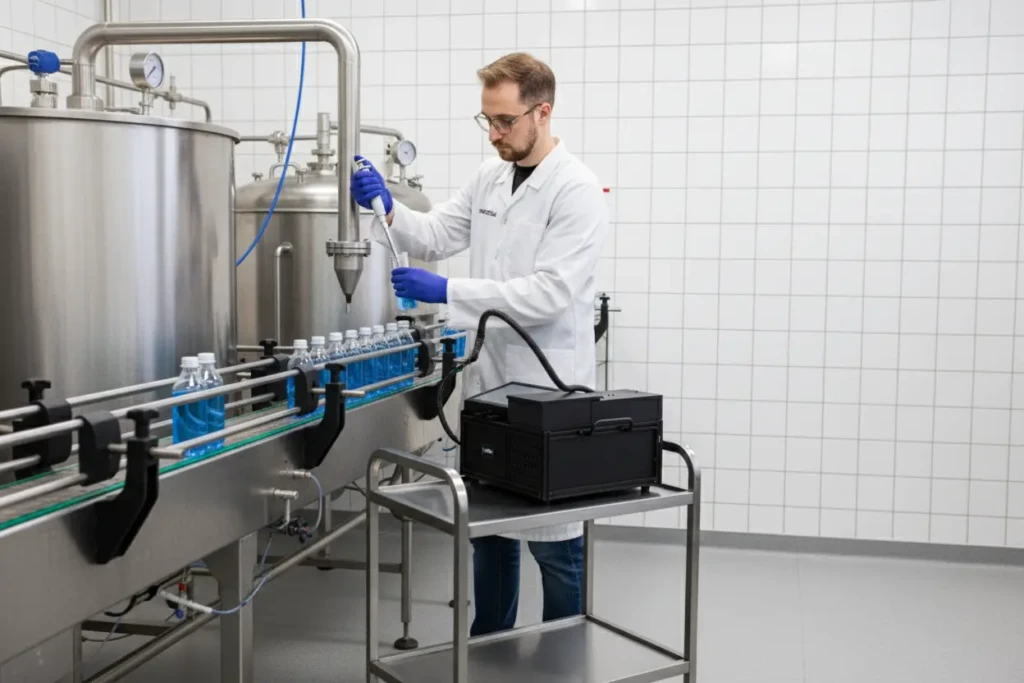
The bridge between the laboratory and production
Rapid verification of batch composition without tedious sample preparation
Support for scaling formulations from R&D to production
Real-time data visualization and analysis

Mobile raw material identification and incoming quality control (IQC)
Fast PASS/FAIL, even without opening the packaging (for transparent packaging)
A tool for raw material control at warehouse intake and in the field
Non-destructive measurement with results in seconds

Dedicated software with proprietary analytical models
Analyte signal converted into a user-readable result
Rapid development and deployment of models in response to specific process issues
Real data for automating and optimizing the production process
Dozens of feasibility studies have confirmed that our AI models and advanced chemometrics can handle measurement problems that classical analytical methods solve with difficulty or not at all:






We start by analyzing the client's process: variability, risks, bottlenecks. Only then do we select the probe configuration, spectral range, and analytical model.
Our models are based on neural networks (CNN) and advanced chemometrics. They handle problems that classical PLS/PCA approaches solve with difficulty: nonlinear phenomena, multicomponent mixtures, matrices that change over time. Thanks to this, our algorithms achieve accuracy down to single ppm even where standard Raman spectroscopy fails.
A model for a new process problem is created quickly, because the path from notification to an updated algorithm is short: direct access to our R&D. The probe has a built-in reference for autocalibration and autodiagnostics, so the device itself signals deviations.
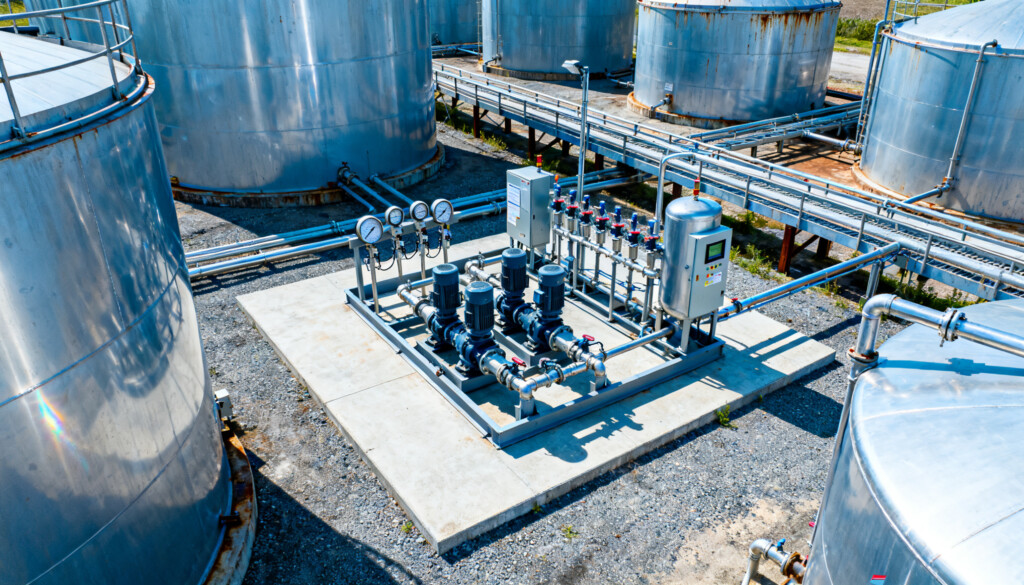
The plant produces UAN 28, 30, or 32 to customer order on a single continuous mixing line. Hitting the specification window for the selected grade and reaching it quickly during grade changes determine the amount of transitional material and the nitrogen above declaration. We demonstrate how to control composition directly in the mixing line.
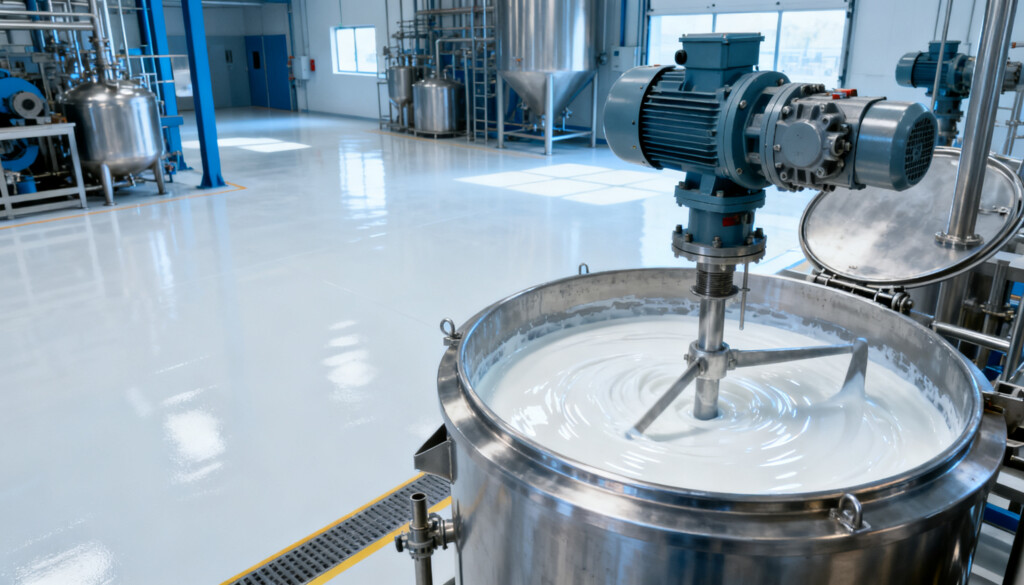
In acrylic dispersions and resins, the copolymer composition and its homogeneity determine the glass transition temperature (Tg) and coating properties, while residual monomer is subject to customer regulations. We demonstrate how to monitor monomer conversion and copolymer composition directly in the reactor.

The molar F/U ratio in UF resin is a fundamental parameter determining formaldehyde emissions from the finished board, and it directly results from the composition of the received UFC concentrate. We demonstrate how to verify the F/U ratio and formaldehyde content in UFC upon delivery – within 1–2 minutes and without reagents.